

Artikel: Marble vs Travertine Home Decor: How to Choose Natural Stone Objects
Marble vs Travertine Home Decor: How to Choose Natural Stone Objects
Natural stone brings a different kind of presence into the home. Unlike synthetic materials or decorative finishes, stone carries weight, temperature, texture, and geological variation. It does not simply fill a space. It changes how a surface feels, how light settles, and how daily objects are placed.
Among natural stones, marble and travertine are two of the most commonly used materials in interior objects. Both are timeless, tactile, and durable, yet they create very different atmospheres. Marble feels more refined and visually expressive. Travertine feels warmer, softer, and more architectural.
When choosing between marble and travertine for home decor, the question is not only which stone looks better. It is about how the object will live in your space.
The Character of Marble
Marble is known for its veining, density, and visual clarity. Each piece carries natural movement across the surface, from soft grey lines to dramatic dark or colored veins. This gives marble objects a sculptural quality, even when the form itself is simple.
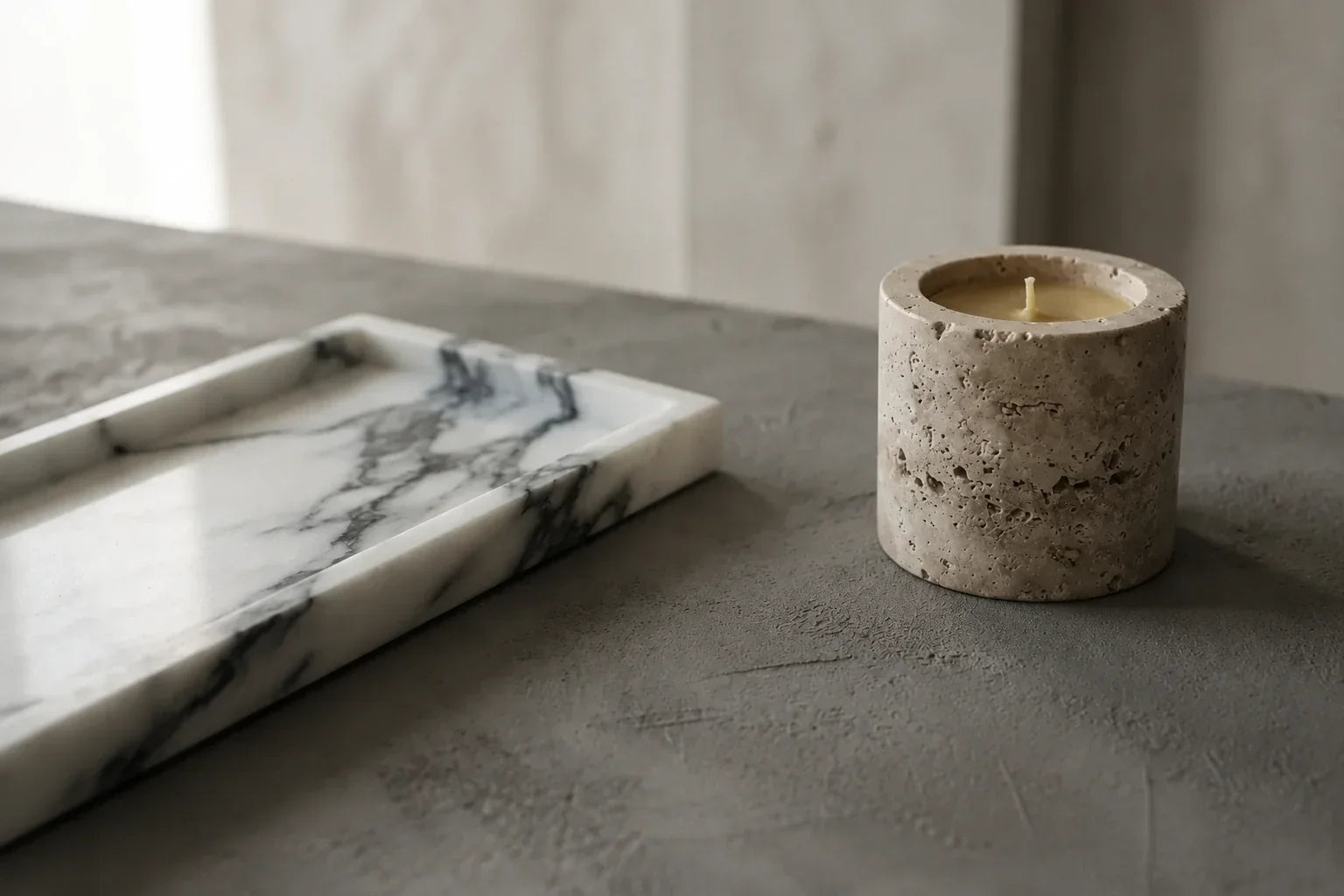
In home decor, marble works especially well when you want an object to create a quiet focal point. A marble tray on a coffee table, a candle holder on a shelf, or a small stone object on a bedside table can bring structure and contrast into the room.
Marble is often best for interiors that need definition. It pairs well with linen, wood, glass, brass, and neutral surfaces. Because of its visual strength, marble does not need much around it. One tray, one candle, or one small object can be enough.
Best for:
* Stone trays
* Candle holders
* Vanity objects
* Coffee table styling
* Bedside and shelf placement
* Interiors that need contrast or visual clarity

The Character of Travertine
Travertine has a quieter, more grounded presence. Its surface is naturally porous, with small openings, soft tonal variation, and an earth-toned warmth. Compared with marble, travertine feels less polished and more architectural.
This makes travertine especially suitable for calm interiors. It blends easily into spaces with plaster walls, warm wood, linen, ceramic, and muted natural colors. Rather than becoming a strong focal point, travertine often works by softening the space around it.
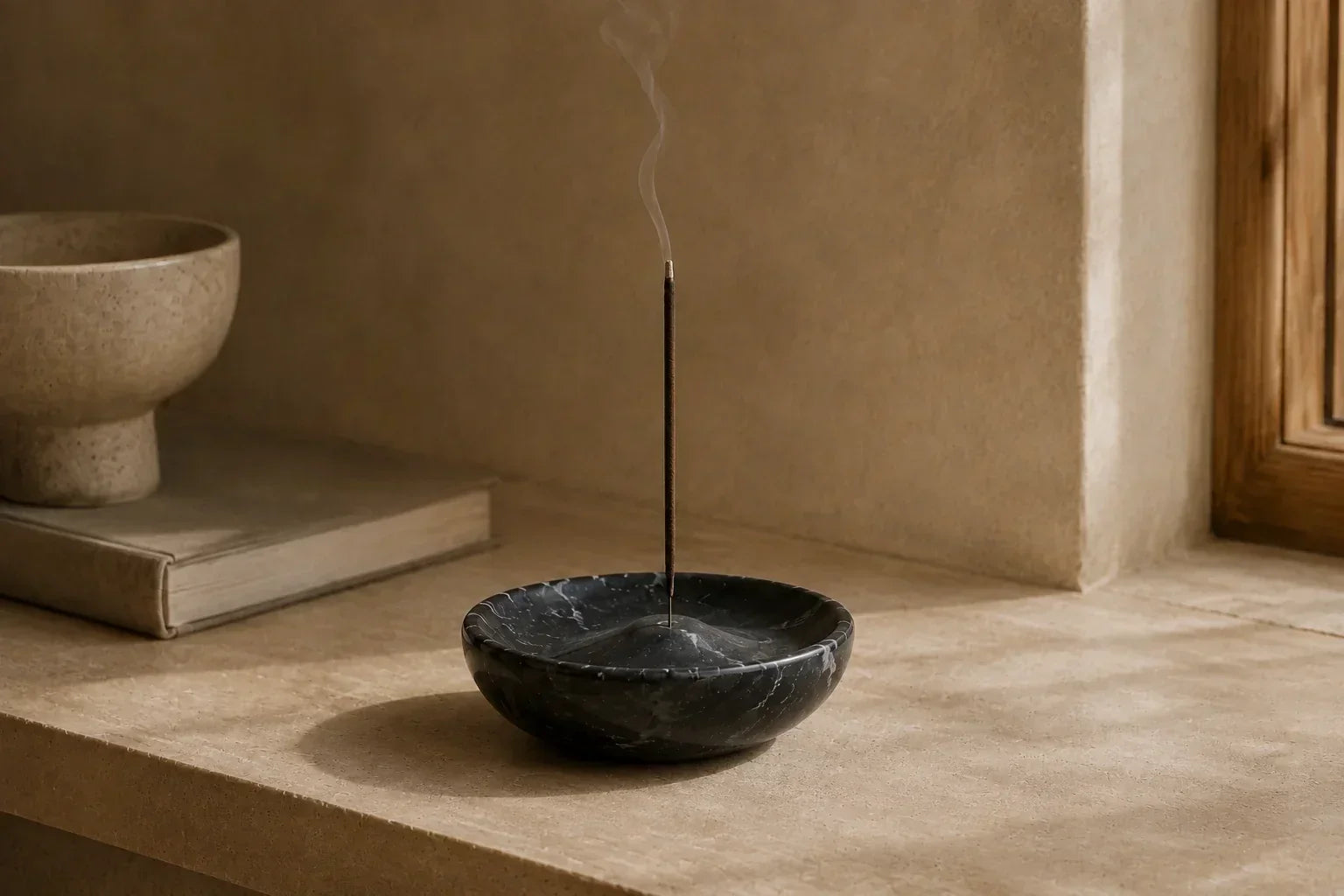
In object form, travertine is ideal for pieces that should feel tactile and grounded: a tray on a bathroom counter, an incense holder in a quiet corner, or a candle object placed beside books or textiles.
Best for:
* Travertine trays
* Incense holders
* Candle objects
* Bathroom counters
* Entryway surfaces
* Minimal and wabi-sabi inspired interiors
Visual Difference: Veining vs Texture
The simplest difference is this:
Marble is defined by veining. Travertine is defined by texture.
Marble often creates a stronger visual statement. Its lines, contrast, and surface movement make each object feel more graphic. This is useful when you want a piece to stand out against a simple background.
Travertine is more subtle. Its beauty comes from porous texture, soft shadows, and tonal depth. It is less about contrast and more about atmosphere.
Choose marble if you want the stone object to be noticed.
Choose travertine if you want the stone object to belong quietly to the room.
Material Feel: Polished Clarity vs Earthy Warmth
Marble usually feels cool, smooth, and dense. It gives a sense of precision and permanence. Even a small marble tray can feel substantial because of its weight and surface clarity.
Travertine feels warmer and more tactile. Its porous surface gives the object a softer, more natural expression. It often feels closer to architecture than decoration.
This difference matters when styling small objects. Marble can elevate a simple candle or perfume bottle. Travertine can make an incense object, bowl, or tray feel more grounded and integrated.
How to Use Marble Objects at Home
Marble works best when the surrounding space is restrained. Because the stone already carries movement and contrast, avoid overcrowding it with too many decorative items.
A marble tray can hold:
* A candle
* Incense
* Jewelry
* Perfume
* Keys
* A small bowl
* A book or reading object
The goal is not to fill the tray, but to give daily objects a place to pause.
For a refined look, pair marble with brass, glass, linen, or dark wood. For a softer look, place it near neutral textiles, warm light, or natural shadows.

How to Use Travertine Objects at Home
Travertine works well in spaces that need calm and warmth. Its color and texture make it suitable for bathrooms, bedside tables, entryways, shelves, and quiet corners.
A travertine object can support:
* Incense rituals
* Candlelight
* Small daily essentials
* Soap or bathroom objects
* Ceramic cups
* Books or natural textiles
Travertine is especially strong when paired with soft light. Its surface catches shadow in a subtle way, making it ideal for slow interiors and tactile spaces.
The Travertine Round Tray offers a broad, low-profile surface for bedside essentials, books, eyewear, or a restrained console arrangement.

Care for Marble and Travertine Objects
Both marble and travertine are natural stones and should be treated with care. They are durable, but not careless materials.
Use a soft dry or slightly damp cloth for cleaning. Avoid acidic cleaners, vinegar, lemon, harsh chemicals, and abrasive sponges. Do not soak stone objects or leave wet items on the surface for long periods.
Because natural stone varies in veining, tone, porosity, and texture, each object will be slightly different. These variations are part of the material, not defects.
For porous stones such as travertine, extra care should be taken with oils, ash, or colored liquids. Use incense and candles with attention, and clean gently after use.
Which Should You Choose?
Choose marble if you want:
* Strong veining
* Visual contrast
* A more sculptural object
* A refined and polished feeling
* A tray or candle holder that stands out
Choose travertine if you want:
* Warm texture
* Softer visual weight
* A more architectural feeling
* A grounded, quiet presence
* An object that blends naturally into calm interiors
Both stones bring permanence into daily life. The right choice depends on the role you want the object to play.
Marble defines.
Travertine grounds.
Together, they create a material language that is quiet, tactile, and enduring.
Explore Natural Stone Objects
Verdora works with natural marble, travertine, onyx, and brass to create stone trays, candle objects, incense objects, and material studies for quiet interiors.
Explore:
* Stone Trays
* Marble Stone
* Travertine Stone
* Candle Objects
* Incense Objects
How to Style a Natural Stone Incense Holder
Explore Natural Stone Collections
For a rectangular example with an ivory base and burgundy-grey veining, see the Calacatta Viola Marble Tray — The Gallery Form.

Hinterlasse einen Kommentar
Diese Website ist durch hCaptcha geschützt und es gelten die allgemeinen Geschäftsbedingungen und Datenschutzbestimmungen von hCaptcha.