

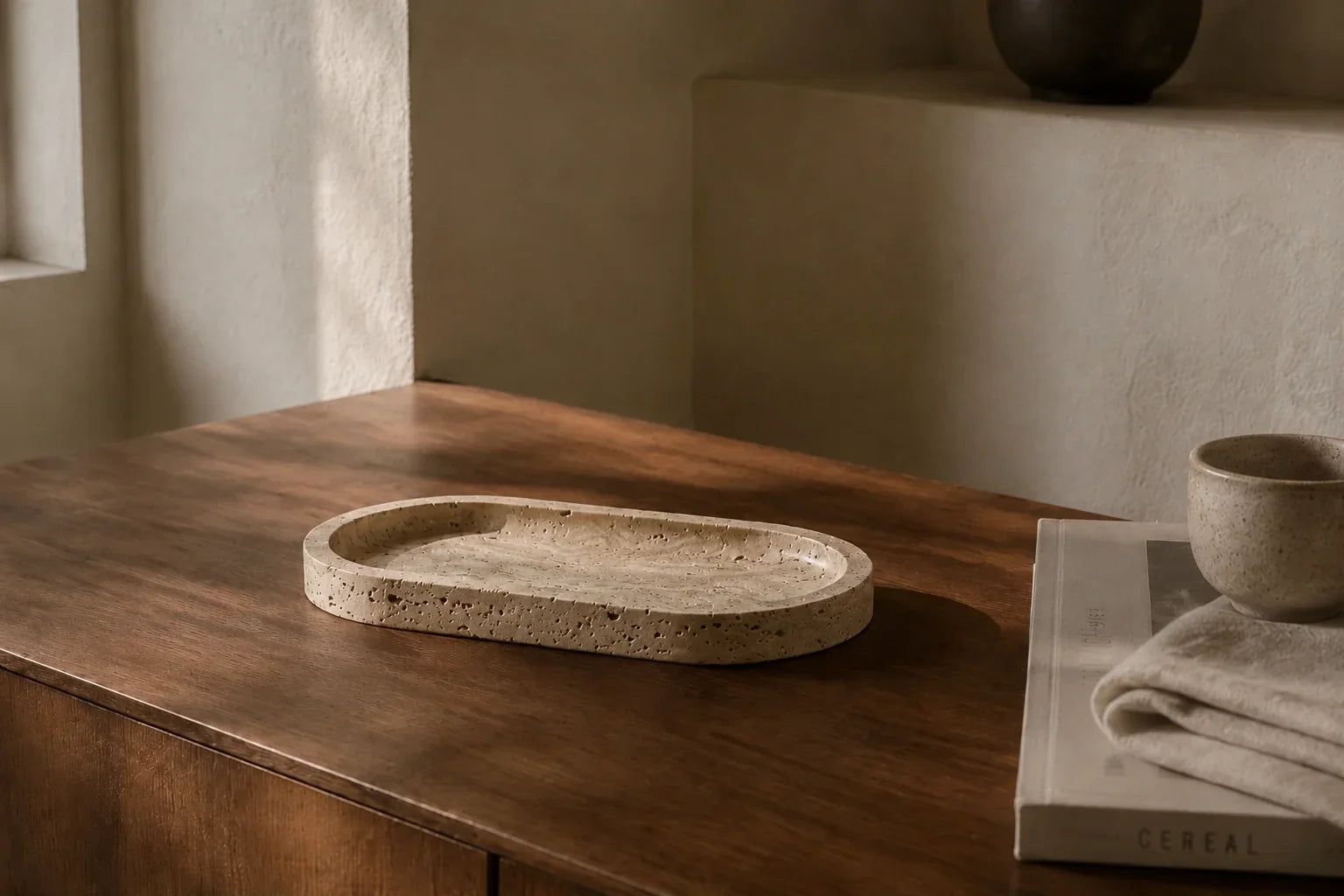
How to Care for Marble and Travertine Decor
Natural stone objects are designed to be lived with, not simply displayed.
A marble tray, travertine candle holder, stone incense dish, or small decorative object brings texture, weight, and a sense of permanence into everyday spaces. These materials create a quieter relationship with the objects around us — one shaped by touch, time, and daily rituals.
But marble and travertine are not synthetic materials. They are natural stones formed over time, carrying unique veining, pores, tonal shifts, and surface variations. These qualities are part of their beauty, but they also mean they respond best to thoughtful, gentle care.
The good news is that caring for marble and travertine decor does not require complicated maintenance. With a few simple habits, natural stone objects can age beautifully and remain part of your home for years.
Why Natural Stone Needs Gentle Care
Marble and travertine are both natural stones, and each has its own character.
Marble is often appreciated for its refined surface and distinctive veining. Its smooth texture and natural movement allow it to bring a sense of clarity and elegance into a space.
Travertine has a warmer and more tactile personality. Its soft pores, earthy tones, and subtle surface variation create a more grounded and organic feeling.
Because these materials are naturally porous, they may absorb liquids if moisture remains on the surface for too long. They can also be affected by acidic substances, harsh cleaners, or abrasive tools.
This does not mean natural stone is fragile. It simply means it should be treated with the same consideration given to other natural materials such as wood, linen, leather, or handmade ceramics.
Natural stone does not require perfection. It responds best to attention.
Daily Cleaning
For everyday care, simple is usually best.
A soft, dry cloth is often enough to remove dust, ash, or light surface marks from marble and travertine decor. When deeper cleaning is needed, use a slightly damp microfiber cloth and wipe gently.
After using water, dry the stone immediately with a clean cloth. This helps reduce water spots, especially on polished marble surfaces.
A simple routine is enough:
- Dust with a soft dry cloth
- Use a slightly damp cloth when needed
- Dry immediately after cleaning
- Clean spills as soon as possible
- Avoid leaving oils, wax, or residue on the surface
For most decorative stone objects, care should feel quiet and effortless.
What to Avoid
The most important rule is to avoid harsh or acidic cleaners.
Do not use vinegar, lemon juice, bleach, ammonia, bathroom cleaners, or abrasive scrubbing pads on marble or travertine. These substances may dull the surface, create marks, or affect the natural finish.
Also avoid allowing water or colored liquids to sit on natural stone for extended periods. Travertine, with its open texture, requires particular attention around moisture.
Avoid:
- Vinegar or lemon-based cleaners
- Harsh household cleaners
- Bleach or ammonia
- Abrasive pads or rough brushes
- Long exposure to water
- Oils or strongly colored liquids left on the surface
When unsure, choose the gentlest method first: a soft cloth and clean water.
Caring for Marble Decor
Marble has a refined presence, but it benefits from mindful use.
Polished marble may show fingerprints, water spots, or subtle marks more easily. This is a natural characteristic of a smooth stone surface, not a flaw. A soft cloth is usually enough to restore its appearance.
Honed marble has a softer, more matte finish and may naturally hide small marks, but it should still be treated gently.
For marble trays and display objects:
- Use coasters under cups or bottles
- Avoid placing citrus, wine, perfume, or oils directly on the surface
- Wipe away candle wax carefully after it cools
- Keep cosmetics and skincare products from sitting directly on the stone
- Dry immediately after cleaning
A marble tray can be part of everyday life. It simply asks to be treated as a natural material rather than a manufactured surface.

Caring for Travertine Decor
Travertine is valued for its warmth, texture, and natural pores.
These small openings and tonal variations are part of what give travertine its character. Because of this texture, travertine objects may collect dust, ash, or residue more easily.
For travertine objects:
- Brush away loose ash with a soft dry cloth
- Avoid allowing water to sit on the surface
- Keep oils and strongly colored liquids away
- Clean candle wax gently after it hardens
- Use a soft brush only when needed for textured areas
Do not try to make travertine appear perfectly uniform. Its natural pores and surface variations are what make each piece unique.
Caring for Candle, Incense, and Ritual Objects
Many natural stone objects are used as part of everyday rituals — candles, incense, matches, oils, and small moments of pause.
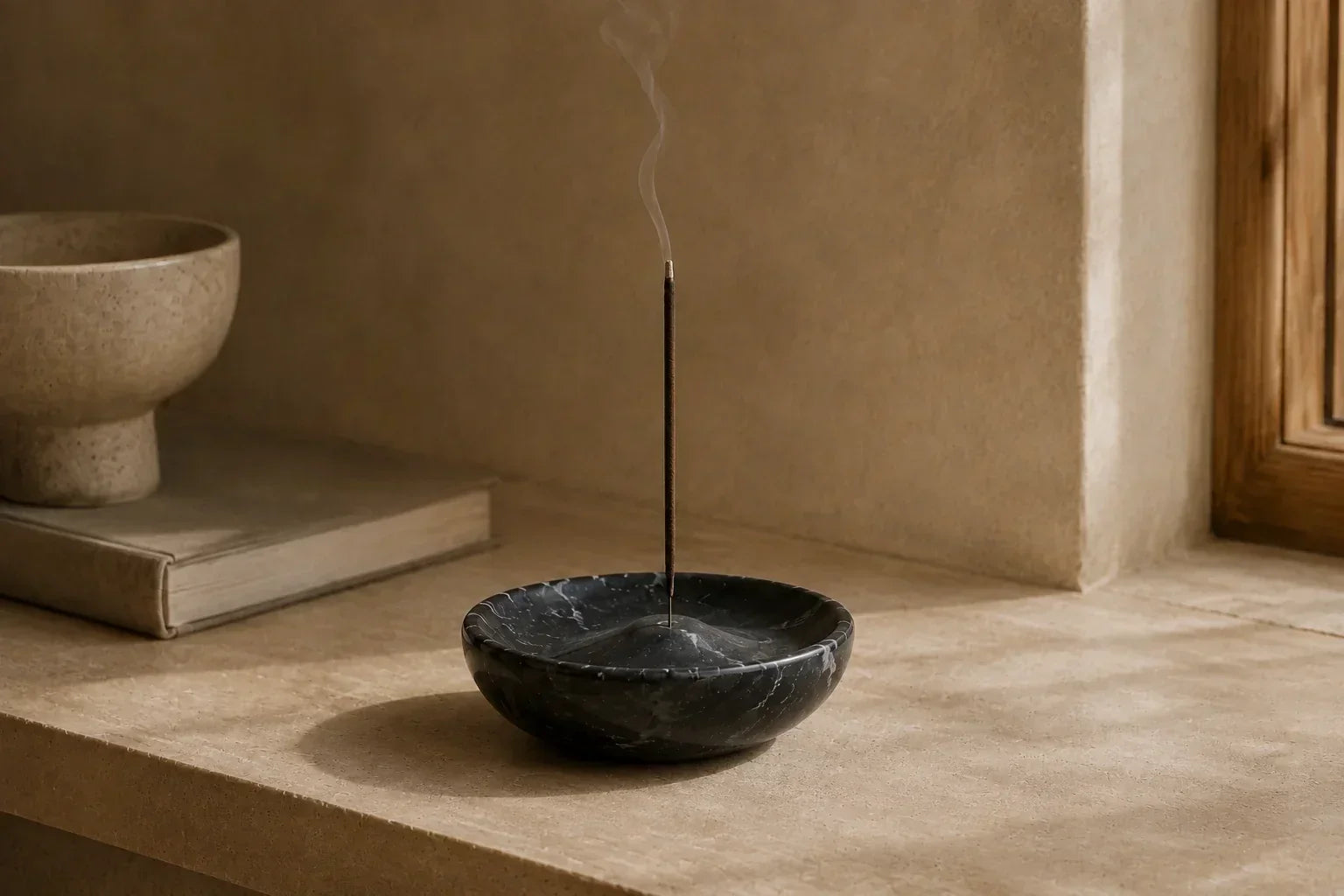
For incense holders, allow ash to cool completely before removing it with a soft cloth. Avoid leaving ash on lighter stone surfaces for extended periods.
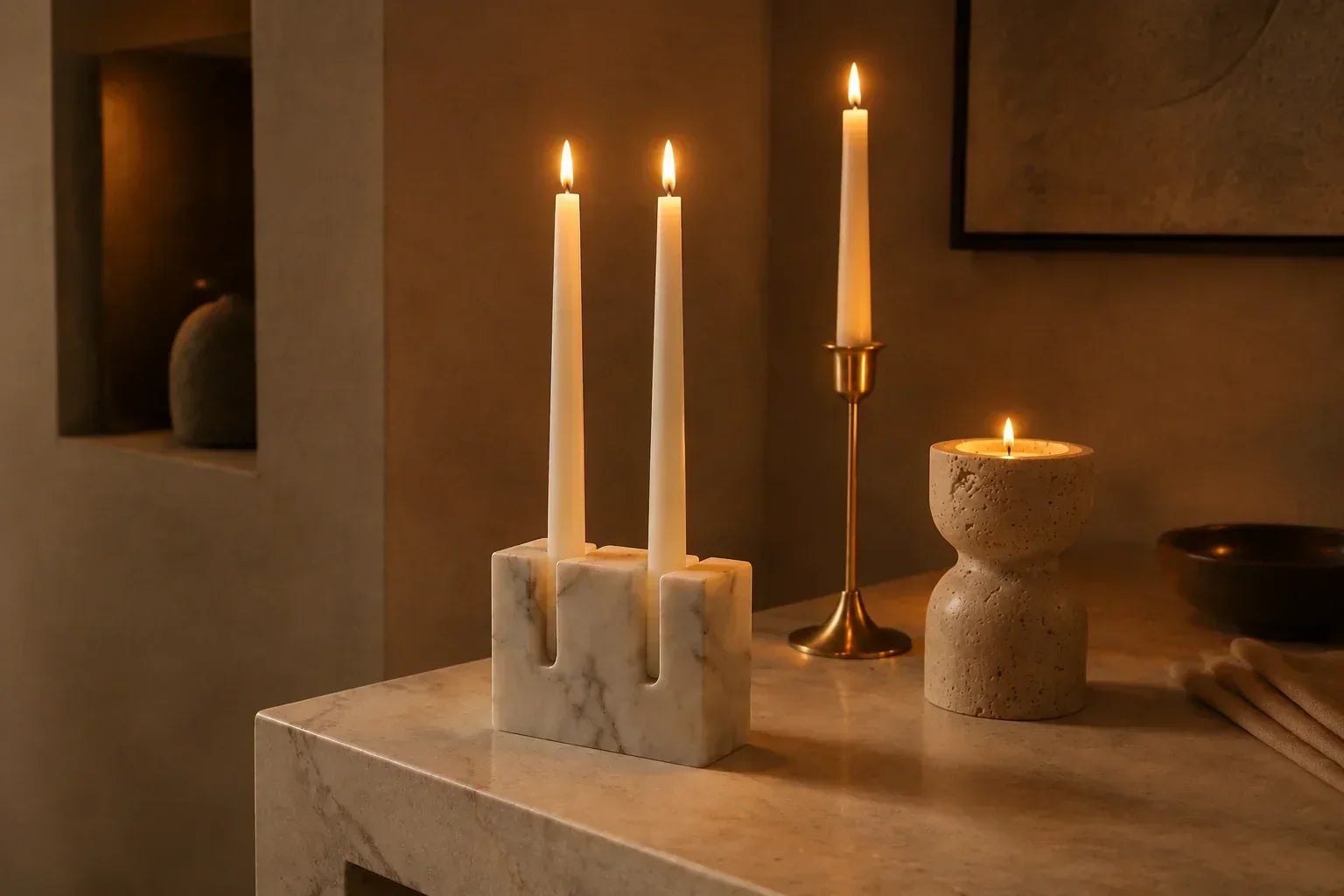
For candle holders, keep the flame centered and avoid allowing candles to burn too low. If wax reaches the stone, allow it to cool before gently removing it. Avoid scraping with metal tools.
For trays used near perfume, skincare, or essential oils, consider using a small dish or coaster underneath bottles. This helps protect porous stone surfaces.
A few thoughtful habits are enough to keep natural stone objects beautiful.
Natural Variation Is Not a Flaw
One of the defining qualities of natural stone is that no two pieces are exactly alike.
Veining, pores, mineral marks, cloudy areas, and tonal changes are natural records of how the stone was formed.
A marble tray may reveal dramatic movement in one area and quiet simplicity in another. A travertine candle holder may show small pores, warm variations, or subtle surface changes.
These differences are not imperfections. They are what make each object distinct.
Natural stone is not designed to look identical. It carries variation because it comes from the earth, not a mold.
This is part of its enduring beauty.

Long-Term Care
With gentle use, marble and travertine decor can age beautifully.
Over time, frequently used objects may develop subtle signs of living — a soft patina, small marks, and changes that reflect their place within the home.
Rather than reducing their beauty, these signs can give natural materials more character and presence.
For objects used heavily or placed in high-contact areas, occasional professional sealing may provide additional protection depending on the stone type, finish, and intended use.
The best long-term care remains simple:
- Keep it dry
- Clean it gently
- Avoid harsh chemicals
- Protect it from oils and acids
- Allow natural variation to remain visible
A More Mindful Way to Live with Objects
Caring for marble and travertine decor is not difficult. It is simply a slower way of living with materials.
You notice the surface. You remove a little ash. You move a candle before it burns too low. You clear a tray and return an object to its place.
These small gestures become part of the relationship between people and objects.
A stone object is not only something to look at. It is something to live with, care for, and allow to age with grace.
To understand how marble and travertine differ in tone, texture, and character, read Marble vs Travertine Home Decor: How to Choose Natural Stone Objects.
For a closer look at how natural materials shape candlelight at home, read Choosing the Right Candle Holder Material: Marble, Travertine, Onyx, and Brass.
When choosing a piece, check the material and finish on its product page. Explore our marble and travertine trays for dimensions and care notes specific to each form.

Hinterlasse einen Kommentar
Diese Website ist durch hCaptcha geschützt und es gelten die allgemeinen Geschäftsbedingungen und Datenschutzbestimmungen von hCaptcha.